



If you’ve ever noticed sloping or sagging floors, don’t ignore them. They might seem like a minor issue at first, but they’re often your home’s way of telling you that something serious is going on in your home’s foundation. Ignoring this issue can lead to serious structural issues, mold, shifts, and more. Fortunately, it is possible to fix uneven floors—and it starts with learning to recognize the signs that something’s wrong.
What Are Uneven Floors?
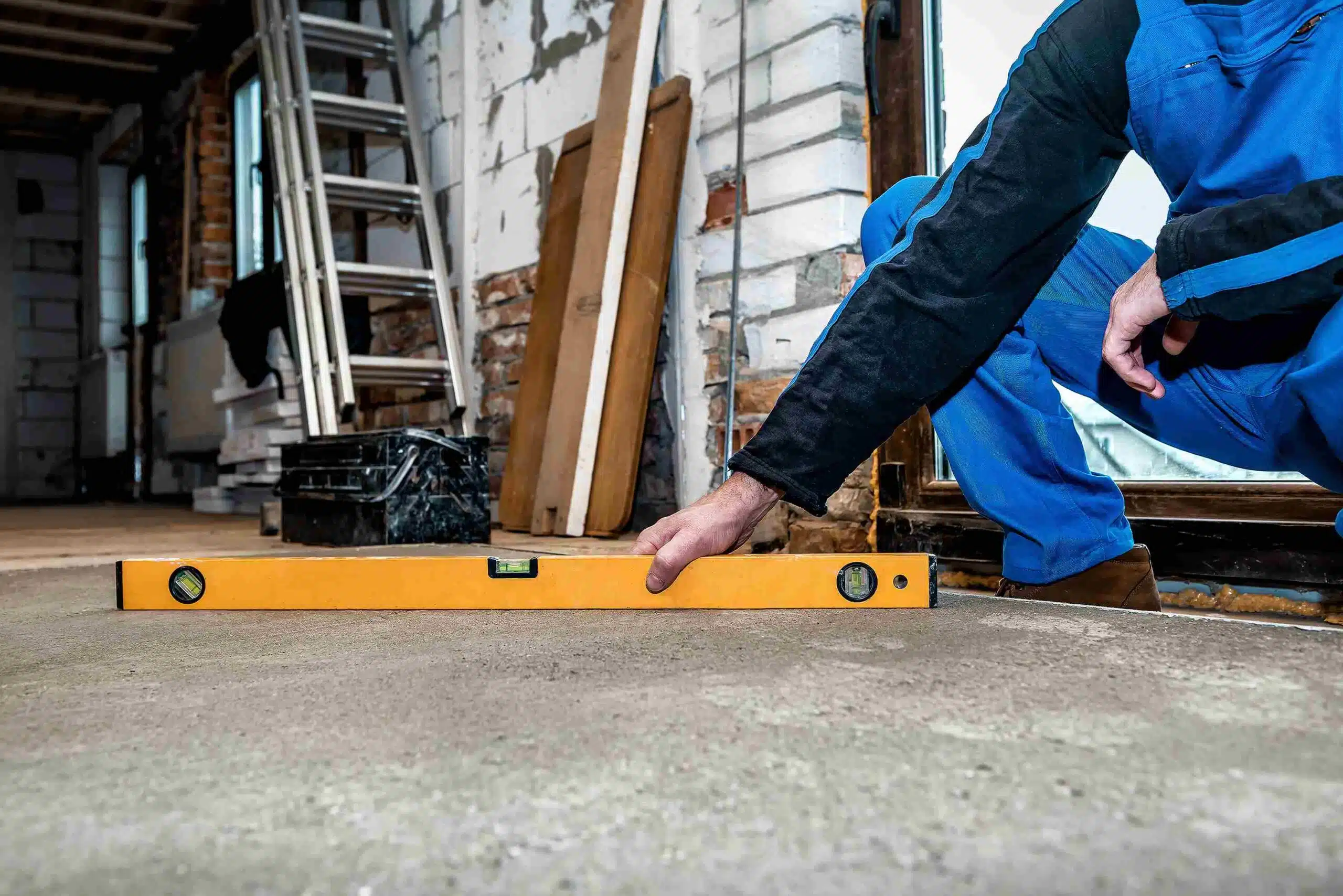
Uneven floors mean the floors in your home aren’t flat or level as they should be. When your floor isn’t level anymore, it means that different parts of your home are sitting on the foundation at different heights. It may not be noticeable right away, but the unevenness gradually becomes more pronounced. You may notice:
- Sloping or tilted floors: One section of your house may be settling lower than another, so walking on the floor may feel slightly uphill or downhill.
- Floors that tilt towards the corner/foundation: When the floor tilts towards a corner, it indicates that the house is leaning in one direction.
- Sagging or dipping floors: The floor dips or sinks in the middle, creating a shallow area where the structure is sinking.
Each of these is a sign that there’s something wrong under your home.
Why Uneven Floors Are a Serious Concern
Uneven floors aren’t a cosmetic problem. They’re a serious concern, especially if you leave them unaddressed. Uneven floors can lead to:
- Structural safety risks: Uneven floors indicate that your foundation is not in good condition. When the foundation of your home is falling apart, the structure it supports is severely affected. There is a risk of structural weakening, which compromises the safety of everyone in the building.
- Hidden foundation damage: Uneven floors don’t develop overnight. By the time you notice unevenness, the foundation has probably sustained years of damage that developed gradually without any apparent signs.
- Increased repair costs over time: If not addressed in time, the foundation problems causing the uneven floor worsen. That means that the cost of repairs may double or even triple.
- Reduced property value: Buyers usually don’t prefer investing in a home with foundation problems. You lose competitive value compared to other houses on the market.
These develop simultaneously, and that means serious consequences for your home.
Common Causes of Uneven Floors
Foundations aren’t invincible, and they’re vulnerable to all kinds of underlying damage. However, due to the foundation’s location, this damage often goes unnoticed. It develops due to unusual settlement, soil changes, problems with the structure itself, and other underlying factors.
Foundation Settlement
Foundation settlement occurs when the ground beneath the structure can no longer support its weight. This can happen due to a specific soil type and condition, or simply due to poor foundation construction. When the foundation settles, the structure tends to tilt in one direction or sink in the middle, leading to uneven or sagging floors.
Expansive or Shifting Soil
Some soil types, especially highly expansive clay soils, can trigger severe foundation problems. These soil types absorb water easily and increase in volume, but they also dry up quickly and shrink. This repeated expansion and contraction creates strange gaps around the foundation, and that destabilizes the entire structure. The foundation sinks or tilts in one direction, causing uneven floors.
Crawl Space Support Issues
The support beams, posts, and joists in your crawlspace and basement are designed to provide stability to the structure. Over time, these supports may rot, bend, or break. They may even be installed on improper footing, or simply corrode over the years, which can eventually lead to sinking floors and structural damage. Even the beams require regular inspections, though damage to these is less common. When any of these structural components is compromised, it can lead to issues such as sagging or bouncy floors, which can eventually cause serious damage to the home.
How Foundation Repair Can Fix Uneven Floors
Foundation repair solutions address the main cause of your uneven floors. The repair process begins with a comprehensive inspection of the foundation to determine exactly what’s wrong underneath the structure. A team of professionals will use specialized tools and targeted methods to diagnose the precise root cause. Then, they’ll determine which repair method is right for the job to restore your home’s structural integrity and get to work.
Common Foundation Repair Solutions for Uneven Floors
Many foundation repair solutions exist, each with its own unique benefits and approach. Some require special piers to restore the home’s integrity, while others rely on reinforcing the existing structure to strengthen the foundation.
Foundation Stabilization Methods
Stabilization is about transferring loads from unstable soil to deeper, load-bearing layers beneath the foundation. To do so, repair teams will use:
- Push piers: These are a heavy-duty solution for foundations that are settling or sinking. To install these, repair teams insert galvanized steel piers deep into the ground until it reaches a stable layer. They excavate the soil around your foundation to expose the footing, attach brackets, and then push steel piers through with hydraulic equipment. This helps stabilize the foundation and lift it to its original level.
- Helical piers: This option involves using steel piers with circular plates welded to the central steel shaft. Instead of drilling these piers directly into the ground, helical piers are basically screwed into the ground using a hydraulic torque motor. The helix-shaped blades support both tension and compression loads, making them suitable for multiple-story structures.
Crawl Space Repair Solutions
If the problem is due to crawlspace issues, the repair team will take a different approach. Rather than focusing on what’s under the foundation, they’ll assess the structure and decide which repair method to use. This can include:
- Adjustable support jacks: These are heavy-duty steel posts that are installed in your crawlspace to support sagging floor joists. They’re adjustable, so you can fine-tune the posts to lift your floors back to their original level and make adjustments as needed. The repair team places a solid base on the crawlspace floor, extending it to the joists above to strengthen the beams and stabilize the floor.
- Beam reinforcement: This is a long-term solution for a crawlspace with compromised beams. These beams carry heavy loads, and if they are damaged, the whole floor can collapse. Beam reinforcement involves replacing damaged beams or strengthening them with additional support. This may include using a steel I-beam, W-beam, or adding laminated veneer lumber beams, depending on the type of damage.
What Happens If Uneven Floors Are Ignored?
Uneven floors need to be addressed as soon as possible. Otherwise, you’re putting your home at risk of:
- Worsening structural damage: The slight slope you notice today can worsen within months. As the foundation issue progresses, the structure will continue to tilt or sink, making the uneven floor more visible. Gradually, this leads to severe structural issues, such as bowed foundation walls and foundation cracks.
- Increased safety hazards: Uneven floors are tripping hazards, especially for kids and the elderly. If the foundation damage becomes severe, there is a risk of structural collapse, which puts everyone in your home at risk. It can even cause water and gas pipes to break and damage electrical wiring, exposing occupants to additional risks.
- Higher repair costs: Repairs in the early stage of damage can be managed with simple, inexpensive solutions. But once the damage escalates, the problem requires more comprehensive solutions that can cost thousands of dollars or more.
- Potential insurance and resale issues: Homeowners’ insurance doesn’t cover foundation problems caused by neglect. If you’re in the middle of selling your home, the property value will be significantly lower.
When to Call a Foundation Repair Professional
Knowing when to opt for professional foundation repair services can save you money and unnecessary stress. Watch for:
- Floors continuing to slope or sag: If you noticed a slight slope a few months ago and it has now dramatically increased, it means the foundation needs immediate repair. Waiting too long at this point can cause additional structural damage.
- Multiple structural warning signs: As foundation damage worsens, you will start noticing signs like bowing foundation walls, cracks, gaps between walls and ceilings, and uneven floors. These signs indicate that something serious is going on underneath the foundation, and this requires immediate professional repair.
- Visible foundation cracks or movement: Perform a visual inspection inside and outside your foundation. If you notice horizontal, diagonal, or widening cracks, this means the structure is moving. It requires immediate expert evaluation.
- Moisture-related damage present: If you are seeing water pooling around your foundation after rain or you have a damp, moldy crawlspace or basement, this is your sign to call a professional. Foundation failure can cause moisture issues, and it can escalate quickly.
These are all signs that you need to call a professional as soon as possible. Otherwise, you’re putting your home and family at serious risk.
Schedule a Professional Foundation Inspection Today
Uneven floors in your home are often linked to foundation issues, and neglecting this problem future issues. If you ever notice floors in your home sagging or tilting or any other sign of foundation damage, don’t hesitate. Contact Bluebird CFW today, and let us restore your home’s stability and strength. Give us a call today.