



How does underpinning work? Let’s explore what underpinning is, the types of underpinning, and how it can support your home. There are significant risks to ignoring foundation issues that require underpinning; proper repair can provide long-lasting stability.
What is Underpinning?
Underpinning is a commonly recommended solution for foundation repair in older homes. It is a long-lasting repair technique used to restore stability and strength to weak foundations. It involves reinforcing an existing foundation to provide stronger structural support. This solution is mainly used when foundations are settling or shifting. Here is how underpinning compares to other foundation repair techniques:
- Commonly used for: Foundation repair solutions are commonly used for fixing settlement cracks and shifting foundations. Underpinning is used for lowering the basement and structural addition.
- Approach: Standard repair techniques use a targeted or surface-level repair approach, whereas underpinning deepens structural support, offering a more comprehensive solution to foundation problems.
- Scope: Most foundation repair solutions are small-scale, whereas underpinning is an extensive solution that requires deep excavation.
- Duration: Standard foundation repair typically takes a few days to complete, whereas underpinning can sometimes take a week or more.
- Cost: Underpinning is more expensive than other standard foundation repair methods.
How Does Underpinning Work?
Different methods can be used to underpin a foundation, depending on the foundation type, available space, soil type, and severity of the damage. However, the overall process is fairly similar for every project.
Initial Assessment
Underpinning begins with a thorough assessment of your foundation and the condition of the soil. Professionals conduct a structural survey to identify any cracks, settlement, or other types of damage. They also perform soil testing and load analysis to determine soil type and structural load. They may also analyze the moisture content of the soil and the depth at which the soil is stable.
Excavation Around the Foundation
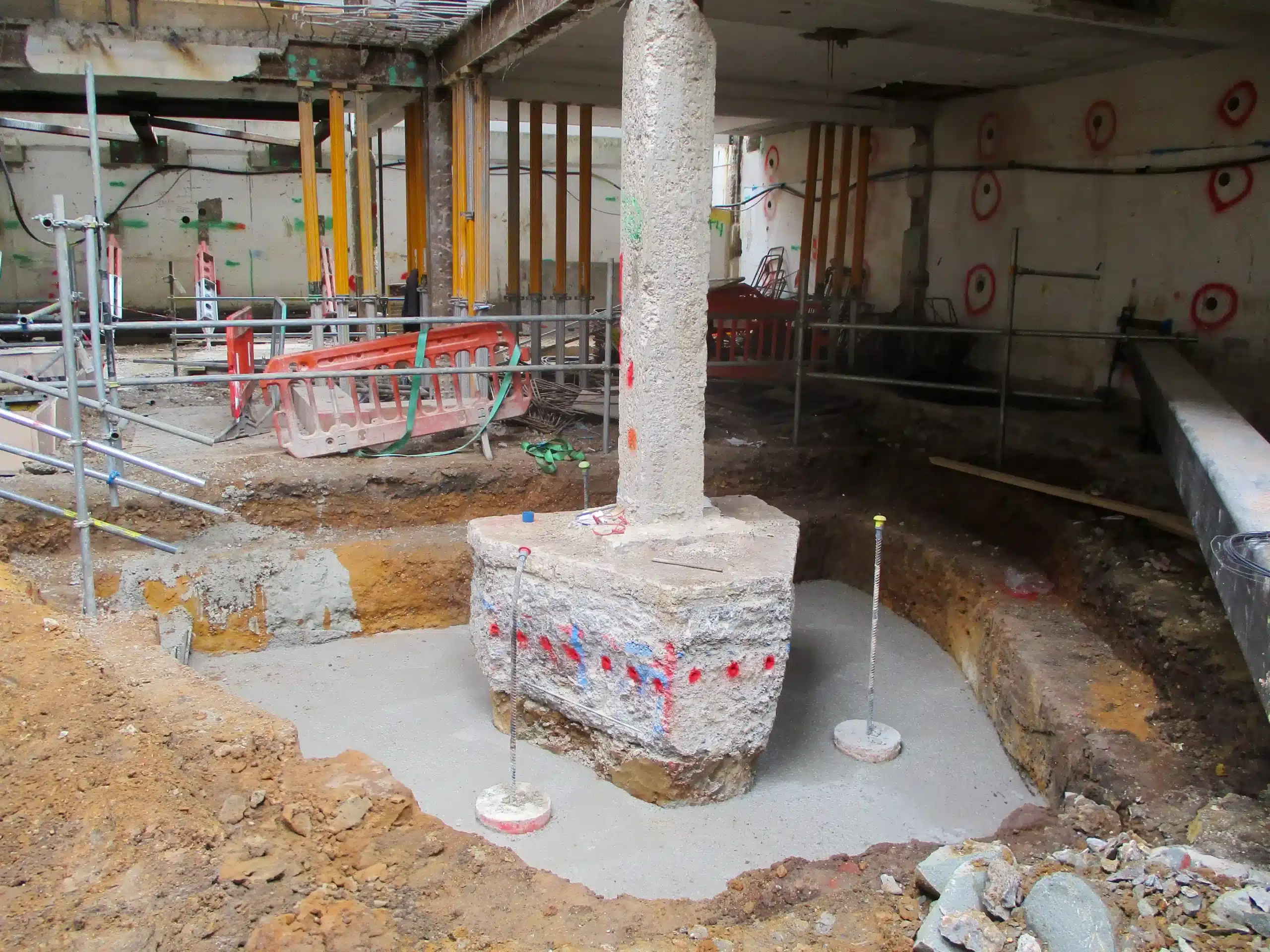
After the inspection and planning are complete, foundation repair experts will likely need to excavate around your existing foundation. This is done in small sections using specialized machinery.
Load Transfer and Jacking
The reinforcement materials, such as helical piers, steel piers, or additional concrete supports, are installed with precision, so the building’s load can be properly supported. This may also involve lifting the foundation so it is level.
Signs That Your Home or Building May Need Underpinning
Look out for the following warning signs that indicate that your home’s foundation needs additional support:
Cracks in the Walls
If your foundation walls or floors have noticeable cracks, it may indicate foundation movement. These cracks may appear in horizontal, vertical, or stair-step patterns.
Uneven or Sloping Floors
Homes with sagging foundations often have uneven or sloping floors. You can also use a ball to check if the floor is uneven. Place a ball on the floor and check if it rolls in a particular direction.
Doors and Windows Sticking
When the foundation settles, doors and windows can get stuck in the frames due to the movement of the walls and floors. If you find it difficult to open or close your doors and windows, your home may have foundation damage.
Types of Underpinning
Underpinning is a construction technique that includes the following methods:
Mass Concrete Underpinning
This method involves pouring a large volume of concrete underneath the existing foundation. Also known as the pit method, it is an ideal option for foundations that need higher load-bearing capacity.
Beam and Base Underpinning
This underpinning method involves installing reinforced concrete beams below the current foundation. These beams distribute the load of the structure evenly.
Mini-Piled Underpinning
This technique is ideal for homes with limited access to the foundation. It involves inserting piles with a small diameter deep into the foundation until they reach the stable soil.
Steel Piers
Steel pier underpinning involves inserting steel piers into the ground around the foundation and attaching them to the footer to provide support and enhance the structural strength of the building. These piles are driven deep into the ground until they reach stable soil, improving the load-bearing capacity of the foundation.
Chemical Injection
This involves pressure-injecting polyurethane foam beneath the foundation. This stabilizes the soil and enhances the load-bearing capacity of the foundation. The chemical injection method is a clean and convenient process that does not require extensive excavation.
Helical Piers
Helical pier underpinning is a method that uses piers with helical blades to restore stability for a compromised foundation. This is a less intrusive method that is suitable for homes with limited access to the foundation.
Benefits of Underpinning
Underpinning a foundation offers the following benefits:
- Strengthens and stabilizes structures: Underpinning is an excellent way to strengthen and stabilize your existing foundation. This method increases the foundation’s capacity to withstand the load of the entire structure, making sure your home remains secure and stable.
- Prevents further damage: Underpinning keeps your foundation in good condition for decades if done properly. It provides better support and stability, minimizing the risk of further damage.
- Increases property lifespan: Underpinning helps you achieve a strong foundation, which improves your home’s structural integrity and its overall lifespan.
- Improves the resale value of the property: Restoring your foundation with underpinning can significantly increase your property’s resale value.
Risks of Ignoring Foundation Problems That Require Underpinning
Ignoring foundation problems that require underpinning can lead to the following risks:
- Severe structural damage and costly repairs: Foundation settlement gradually worsens, leading to structural damage such as bowed walls, sloping floors, and widening cracks. This can impact the structural integrity of your home and require costly repair solutions.
- Safety hazards for occupants: An unstable foundation poses a risk to occupants. If left unaddressed, the building may become vulnerable to collapse.
- Basement leaks and water intrusion: Cracks or gaps in the foundation can serve as entry points for moisture from the surrounding soil. This can lead to moisture-related problems and further weaken the foundation.
- Decreased property value: Buyers may be unwilling to purchase a property with existing foundation problems, which can significantly lower its value.
DIY vs. Professional Underpinning
Underpinning is not a DIY project. Unlike other minor foundation repair solutions, underpinning is an extensive process that requires expertise and specialized tools. It is best if you leave the job to trained and experienced foundation repair professionals. For a secure and stable foundation, hire licensed and insured foundation repair contractors.
Hire the Right Foundation Underpinning Contractors
Is your home experiencing foundation issues? Hiring the right foundation repair contractor makes all the difference. Look for local contractors who specialize in underpinning. If you notice any foundation problems, contact your local foundation experts right away and schedule an inspection. At Bluebird CFW, we offer foundation repair services to help local homeowners protect their investment in their property.


