




If you own a home in Michigan, you’ve probably noticed that the weather can be tough on homes. Foundation problems show up frequently here, and spotting a crack can leave you wondering whether it’s a minor issue or a sign of something more serious. The reality is that some cracks need immediate repairs while others are just part of normal foundation settling. In this guide, we’ll help you understand what causes foundation cracks in Michigan homes and how to repair them properly.
Why Foundation Cracks Are Common in Michigan
The climate and geology of Michigan create perfect conditions for foundation damage. The causes of foundation cracks in your home stem from several major factors, including:
1. Michigan’s Soil Conditions
Michigan soil is rich in clay. This means that it swells when it absorbs water. When dry weather arrives, the clay shrinks considerably and pulls away from foundation walls, creating a constant cycle of pressure and movement that leads to cracking.
2. Frost Heave
Water in the soil freezes during Michigan’s cold winters and expands by roughly 9%. This expansion causes the soil to push against your foundation with tremendous force, causing the walls to crack.
3. Freeze-Thaw Cycles
Water works its way into small cracks and pores in concrete throughout the year. In winter, temperatures fluctuate frequently, causing this trapped moisture to freeze and thaw repeatedly. Each freeze expands the openings wider than the previous time, gradually compromising your foundation.
4. Tree Roots and Landscaping Issues
Large trees near your home extend roots beneath the foundation, searching for water and stability. As these roots grow thicker, they displace soil and apply direct pressure on the foundation walls, contributing to cracking.
5. Construction and Settling Issues
Most older homes were built without steel rebar reinforcement inside the concrete, which means that they are more vulnerable to cracks caused by hydrostatic pressure or foundation settlement. All structures settle as the ground beneath them compacts over decades. When settling occurs unevenly, it creates stress points that develop into visible cracks.
Types of Foundation Cracks You’ll See in Michigan Homes
Different cracks mean different things about what’s happening with your foundation. The most common types of foundation cracks that Michigan homeowners encounter include the following:
1. Hairline Cracks
Hairline cracks are very fine lines that are barely visible when you look at your foundation. As your home settles and concrete goes through its natural curing process, these tiny fissures appear but rarely signal anything serious.
2. Vertical Cracks
Vertical foundation cracks go straight up and down on the wall. They’re pretty common in poured concrete and usually appear due to regular settling. However, you should pay attention if the top or bottom of the crack is significantly wider, or if it is leaking.
3. Horizontal Cracks
Foundation cracks in walls that go sideways are a warning sign of trouble. Horizontal cracks are often due to settlement or hydrostatic pressure.
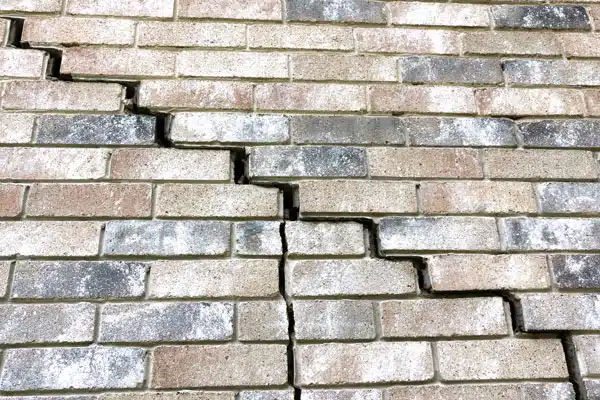
4. Stair-Step Cracks in Brick or Block Walls
You’ll recognize these cracks by their zigzag pattern between blocks or bricks. Uneven settling or moisture shifts in the soil create stair-step cracks.
5. Diagonal Cracks
Diagonal cracks slant across your foundation at an angle. One side typically appears wider, showing where your foundation is sinking more rapidly compared.
6. Slab Floor Cracks
Cracks in slab floors form when the soil underneath gets wet and expands upward. Clay soil is particularly prone to this swelling when it absorbs moisture. Cold Michigan winters add another layer of stress because water trapped under your slab can freeze, which forces the concrete to lift and break apart.
Risks of Ignoring Foundation Cracks in Michigan
Ignoring issues with your foundation can actually allow the issues to grow and get worse over time.
1. Structural Damage & Instability
Foundation cracks weaken your home’s support system, causing floors to slope, walls to crack, and doors to jam in their frames. Eventually, the damage can become so serious that your house is no longer structurally sound.
2. Escalating Repair Costs
What begins as a simple crack repair can evolve into a complex project requiring underpinning or wall anchors if you wait too long, dramatically multiplying your expenses.
3. Basement Flooding Risk
Cracks let water pour into your basement during heavy rains and spring thaws, ruining your belongings, flooring, and furniture.
4. Reduced Home Value and Difficulty Selling
Buyers either avoid homes with foundation problems or demand steep price reductions to compensate for the risk. Lenders refuse to approve mortgages for properties with unresolved structural issues, limiting your buyer pool to cash purchasers only.
5. Higher Heating Costs in Cold Climates
Cold air leaks through foundation cracks during the winter months, forcing your heating system to run constantly and significantly increasing your energy bills.
How to Repair Foundation Cracks in Michigan Homes
For homeowners looking to repair foundation cracks in Michigan, here are the key steps to fix them and protect your home long term.
1. Foundation Inspection and Crack Assessment
It’s always a good idea to hire foundation experts. They can examine your foundation using specialized tools like thermal imaging and moisture meters to find the root cause. Marking the crack ends and checking them over weeks helps determine if they’re stable or actively growing.
2. Crack Cleaning and Preparation
Clean the surface by removing loose concrete, old paint, and any existing sealers with a wire brush. After cleaning, vacuum away all dust and lay down drop cloths to catch repair material drips.
3. Sealing Cracks
Hairline cracks can be filled with sealants to prevent them from growing or leaking. Fixing foundation cracks that leak or are larger requires polyurethane foam, which expands inside the opening to block moisture completely.
4. Structural Stabilization
If cracks are being caused by foundation shifting or settlement, your home may require more extensive repairs. Walls that bow inward need reinforcement with carbon fiber straps or steel beams anchored to your floor and ceiling joists. In cases of sinking foundations, helical piers are installed by screwing them deep into solid soil layers. These piers then support your home’s weight instead of the unstable ground above. Foundation repair professionals will evaluate the condition of your foundation and recommend the best solution.
Preventing Future Foundation Cracks in Michigan Homes
Preventative actions keep your foundation safe from the harsh weather conditions in Michigan. Follow these steps:
- Keep gutters/downspouts clear: Clean your gutters twice yearly, and extend downspouts at least 6 to 10 feet from your foundation to avoid saturating the surrounding soil.
- Maintain proper yard grading: The ground around your home should slope away from the foundation so that water naturally drains during rainfall and snowmelt.
- Install/maintain a sump pump and drain tile: Drain tile systems use perforated pipes to collect groundwater before it reaches your foundation. Then, a sump pump removes this water and discharges it safely away from your home, with a battery backup for protection during power cuts.
- Monitor small cracks regularly: Check existing cracks every few months for any signs of active foundation movement, such as widening or lengthening, that call for professional foundation repair.
- Schedule routine foundation inspections: Professional inspectors have specialized equipment that can detect subtle problems you might not have discovered yourself. So, schedule an inspection every 3 to 5 years or if you notice signs of damage.
Hire a Professional Michigan Foundation Repair Contractor
To find the right foundation repair contractor in Michigan, you should look beyond just price and evaluate their credentials and local knowledge. Furthermore, a Michigan-based contractor recognizes how clay soil shifts with seasonal moisture and can properly fix problems created by the state’s challenging freeze-thaw weather patterns.
Start by confirming that anyone you might work with has proper insurance coverage, strong local references, and solid warranty coverage on their work. If you’re looking for an experienced, trusted company to address foundation issues, give Bluebird CFW a call. We offer no-obligation inspections to help you get started.


